.png "Furbo’s Brutal Verdict on De Jong After He Silenced His Critics") 11
11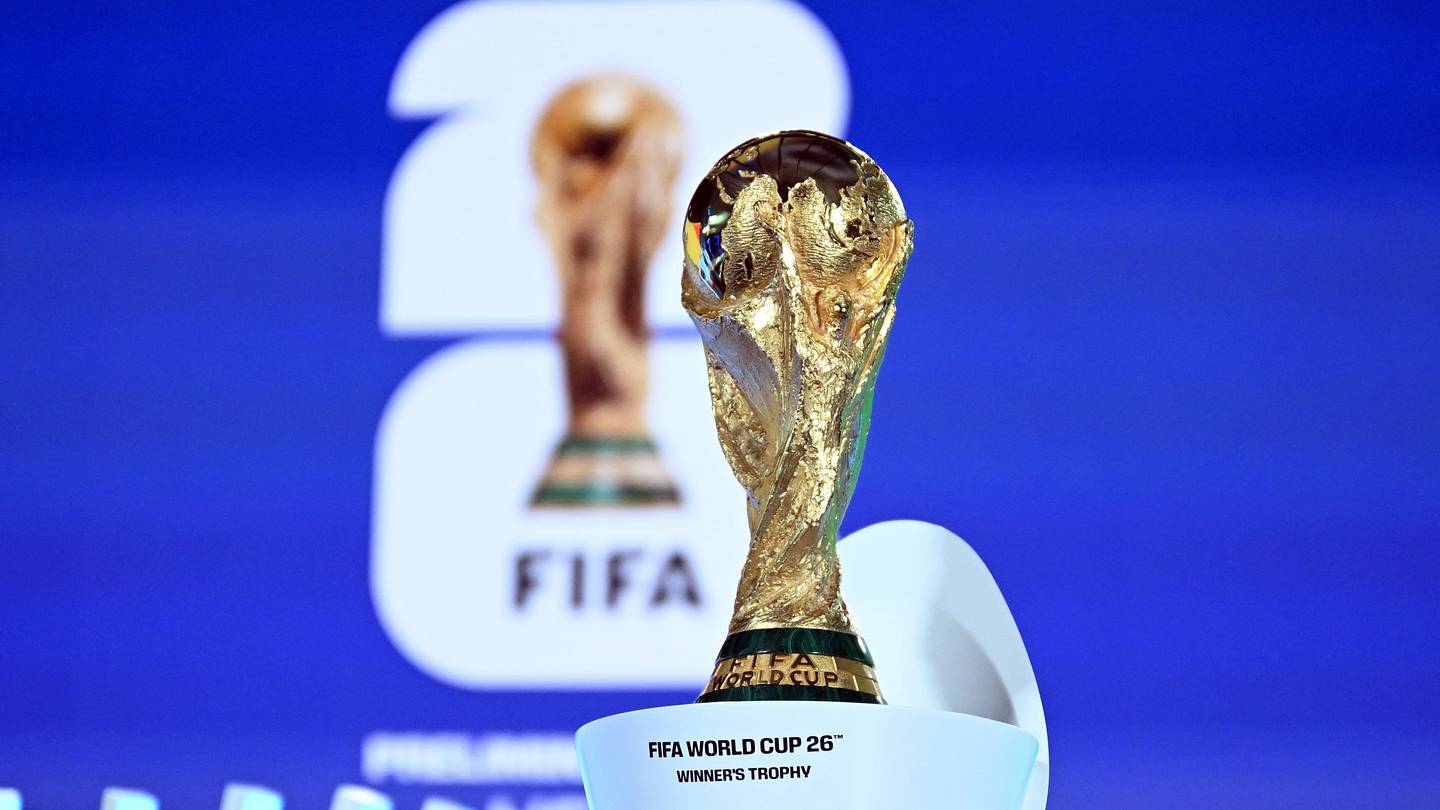
The 2026 World Cup has reached an exciting turning point! The group stage is officially over, and the tournament is now heading into the Round of 32. That means the real drama is about to begin.
The tournament started this summer with 48 teams from all around the world. After weeks of intense matches, that number has been cut down to 32 teams. Some big-name countries didn’t make it through — teams like Uruguay, Scotland, and Türkiye have all been eliminated.
But here’s the good news for fans of the top teams: all the pre-tournament favorites are still alive! The teams most people expected to do well are still in the running for the championship across the United States, Canada, and Mexico.
You might be wondering: what is a "supercomputer" doing predicting soccer games?
Think of it like this: imagine you had a really smart robot friend who had watched every single soccer match ever played. This robot doesn’t get emotional, doesn’t have favorite teams, and doesn’t get tired. It just looks at numbers, patterns, and data — like how well a team has been playing, their past results, and how strong their opponents are — and then makes its best guess about what will happen next.
That’s basically what the Opta supercomputer does. It crunches huge amounts of data to calculate the probability (or chance) of each team winning their matches. It’s not perfect — that’s what makes soccer so exciting! — but it gives us a really interesting look at who the numbers favor.
The supercomputer has analyzed every single Round of 32 match. Here’s what it thinks will happen:
Argentina has the highest odds of reaching the Round of 16 at a whopping 89.24%! They’re facing Cabo Verde, a smaller team that has surprised everyone just by making it this far. The computer expects Argentina’s journey to continue comfortably.
Spain is expected to handle Austria with ease, with an 85.22% chance of winning.
England is right up there too, with an 84.04% chance of beating DR Congo.
The three countries hosting the tournament — the United States (USMNT), Canada, and Mexico — are all expected to advance:
| Match | Most Likely Winner | Win Probability |
|---|---|---|
| Argentina vs. Cabo Verde | Argentina | 89.24% |
| Spain vs. Austria | Spain | 85.22% |
| England vs. DR Congo | England | 84.04% |
| France vs. Sweden | France | 81.46% |
| Germany vs. Paraguay | Germany | 78.58% |
| USMNT vs. Bosnia and Herzegovina | USMNT | 78.46% |
| Colombia vs. Ghana | Colombia | 71.91% |
| Brazil vs. Japan | Brazil | 68.94% |
| South Africa vs. Canada | Canada | 68.29% |
| Côte d’Ivoire vs. Norway | Norway | 67.81% |
| Portugal vs. Croatia | Portugal | 67.42% |
| Switzerland vs. Algeria | Switzerland | 65.21% |
| Netherlands vs. Morocco | Netherlands | 61.17% |
| Mexico vs. Ecuador | Mexico | 61.35% |
| Belgium vs. Senegal | Belgium | 56.91% |
| Australia vs. Egypt | Egypt | 53.56% |
Important to Remember: These percentages are just predictions based on data. Soccer is unpredictable — that’s what makes it the most popular sport in the world! Underdogs can and do win.
Now for the big question everyone wants answered. The supercomputer has looked all the way to the final and calculated each team’s chance of lifting the trophy.
The three co-hosts have the lowest chances of winning the whole thing:
Fun Fact: Even though the USMNT has a 2.45% chance of winning, there are still 10 teams the computer thinks are more likely to win. That shows just how competitive this tournament is!
The Opta supercomputer is a powerful computer system that analyzes massive amounts of soccer data — including team performance, player stats, historical results, and match conditions — to calculate the probability of different outcomes. It doesn’t "watch" games like a human; instead, it uses mathematical models to make predictions based on patterns in the data.
Even though Argentina won the last World Cup and has the legendary Lionel Messi, the supercomputer looks at many factors — including current squad strength, recent form, and overall team performance in the group stage. France’s squad depth and recent results give them a slight edge in the computer’s calculations. However, the difference between them is very small (only about 2.4%), so it could easily go either way!
Technically, yes! The supercomputer gives Argentina an 89.24% chance of winning, which means Cabo Verde still has roughly a 10-11% chance. In soccer, that’s not zero! Underdogs do pull off surprises from time to time — it’s one of the reasons the World Cup is so exciting to watch.
Playing at home gives teams a nice boost — they have familiar conditions, supportive fans, and don’t have to travel as much. However, winning the entire World Cup requires beating the best teams in the world, one after another. The host nations are good enough to advance a round or two, but the supercomputer doesn’t think they have quite enough to beat powerhouses like France or Argentina in the later stages.
Absolutely not! The supercomputer’s predictions are just that — predictions. They’re the best guess based on available data, but they can’t account for everything: a last-minute injury, a referee’s decision, a moment of individual brilliance, or even bad luck. The beauty of the World Cup is that anything can happen once the players step onto the pitch. That’s why hundreds of millions of people around the world will be watching every single match!