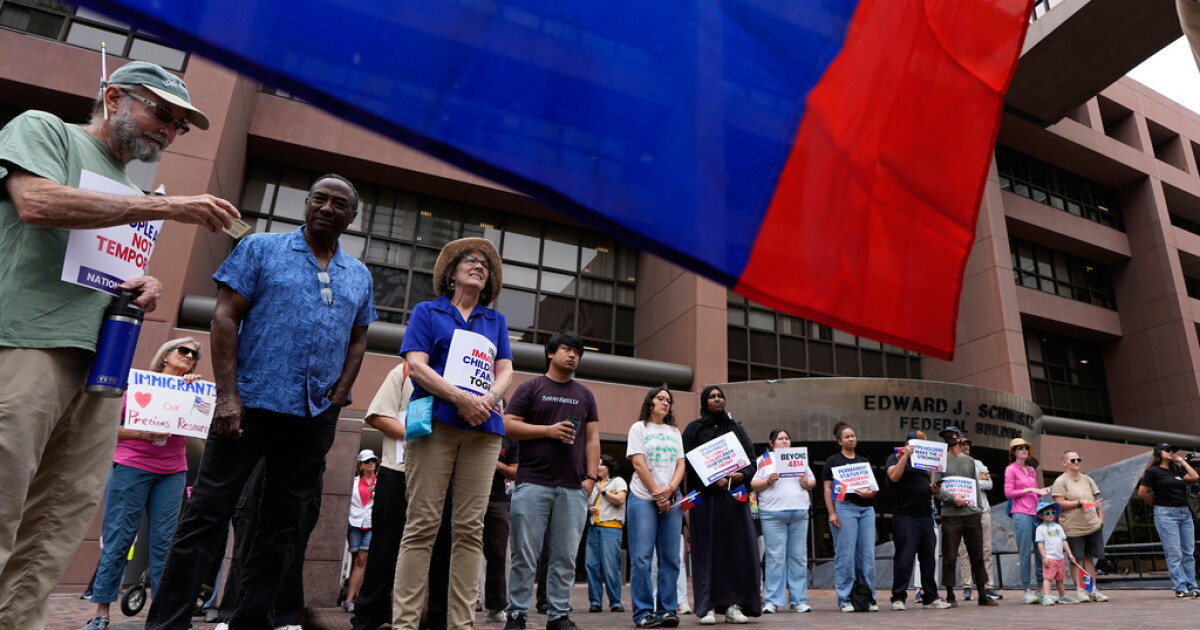
Mayor Gloria Urges Congress to Protect Haitian Neighbors: What You Need to Know About TPS
Important Callout: This article explains a current political situation in simple terms. It is for educational purposes and does not constitute legal advice.
What Is Happening Right Now?
San Diego Mayor Todd Gloria is asking the U.S. Congress to pass a new law. This law would protect more than 350,000 Haitian immigrants who currently live and work legally in the United States.
Their legal protection—called Temporary Protected Status (TPS)—expired on July 27, 2024. Without action from Congress, these families could face deportation.
What Is TPS? (Explained Like I’m 5)
Imagine your neighbor’s house catches fire. You invite them to stay at your house until their home is safe again. TPS works kind of like that.
- It is a temporary "safe harbor" status given by the U.S. government.
- It applies to people from countries experiencing dangerous conditions—like war, natural disasters, or epidemics.
- It allows them to live and work legally in the U.S. until things improve back home.
- It is not a path to citizenship (becoming a U.S. citizen). It is temporary.
Key Fact: TPS was created by Congress in 1990. The Secretary of Homeland Security decides which countries qualify.
Why Did Haitian TPS Expire?
Here is the timeline of what happened:
- 2010: A massive 7.0 magnitude earthquake devastated Haiti, killing over 200,000 people. The Obama administration granted TPS to Haitians.
- 2018–Present: Haiti entered a deep crisis—gang violence, political instability, and kidnappings forced over 600,000 people to flee their homes.
- June 2024: The U.S. Supreme Court ruled that the Trump administration had the legal authority to end TPS protections for Haiti (and Syria).
- July 27, 2024: The TPS designation for Haiti officially expired.
Who Are the People Affected?
Mayor Gloria emphasizes that TPS holders are not just statistics—they are community members.
They are:
- Healthcare workers taking care of patients.
- Caregivers looking after children and elders.
- Service industry employees keeping restaurants and hotels running.
- Small business owners creating jobs.
- Neighbors raising families—many have lived in the U.S. for over a decade.
They pay taxes, strengthen the economy, and contribute daily to cities like San Diego.
The Proposed Solution: Senator Markey’s Bill
Senator Ed Markey (D-Massachusetts) has introduced a Senate bill to fix this.
| Detail |
Description |
| Goal |
Extend TPS for Haitian nationals. |
| Duration |
Until March 2029. |
| Action Required |
Congress must vote to pass the bill into law. |
Mayor Gloria, speaking as President of the U.S. Conference of Mayors, says mayors across the country support this bill.
Why Is Haiti Considered Unsafe Right Now?
The U.S. State Department currently warns of "widespread violence, kidnappings, and instability" in Haiti.
A Quick History (Simplified):
- 1957–1986: Brutal dictatorship under François "Papa Doc" and Jean-Claude "Baby Doc" Duvalier.
- Decades of instability: Coups, military-backed leaders, and corruption.
- 2018–Present: "The Haitian Crisis"—massive protests against corruption + armed gang violence controlling large parts of the capital, Port-au-Prince.
- Result: Thousands dead, 600,000+ displaced internally or fleeing the country.
Mayor Gloria’s Argument: "No family should face deportation to a country where the State Department says violence and kidnappings are rampant."
Political Context: Why Is This Controversial?
The issue has become highly politicized:
- Trump Administration (2017–2021): Attempted to end TPS for Haiti. Former President Trump reportedly used a vulgar slur to describe Haiti and African nations in 2018. In 2024, he repeated a debunked conspiracy theory claiming Haitian immigrants were eating pets in Ohio.
- Biden Administration: Extended TPS several times, but the Supreme Court ruling limited their options.
- Current Fight: It is now up to Congress to pass a law, because the courts have said the Executive Branch (the President) cannot unilaterally keep extending it under current law.
What Happens Next? (Numbered Steps)
- Senate Debate: Senators discuss and vote on Senator Markey’s bill.
- House Vote: If it passes the Senate, the House of Representatives must also pass it.
- Presidential Signature: The President signs it into law.
- Implementation: The Department of Homeland Security officially re-registers Haitian TPS holders.
Callout: If Congress does nothing, the legal status of 350,000+ people remains in limbo, and they could eventually face deportation proceedings.
Summary
- 350,000+ Haitians lost their legal work/live status (TPS) on July 27, 2024.
- This happened because of a Supreme Court ruling allowing the previous administration to end the program.
- Haiti is currently unsafe (gang violence, kidnappings, instability).
- TPS holders are essential workers, taxpayers, and long-term residents.
- Senator Markey has a bill to extend protection until March 2029.
- Mayor Gloria and mayors nationwide urge Congress to pass it immediately.
- Only Congress can now provide a permanent legislative fix.
FAQ: Your Questions Answered
1. Does TPS give people a Green Card or Citizenship?
No. TPS is temporary. It gives permission to stay and work for a set period. It does not lead directly to a Green Card (permanent residency) or citizenship.
2. Can Haitians with expired TPS be deported immediately?
It is complicated. Once TPS expires, they technically lose protection from deportation and work authorization. However, actual deportation proceedings take time and resources. Many may have other pending immigration cases. The situation creates immense fear and legal limbo.
3. Why can’t the President just extend it again?
The Supreme Court ruled in June 2024 that the way the Trump administration tried to end TPS was legal. This ruling effectively tied the current administration’s hands, meaning a new law from Congress is now the clearest path to restore protections.
4. How does this affect San Diego specifically?
San Diego has a significant Haitian community. Mayor Gloria stated these residents are healthcare workers, caregivers, business owners, and taxpayers. Losing them would hurt the local economy and tear families apart.
5. How can I help or learn more?
- Contact your Senators and Representative to share your opinion on the bill.
- Follow updates from the U.S. Conference of Mayors or immigrant advocacy organizations like the American Immigration Council.
- Read the State Department Travel Advisory for Haiti to understand the safety conditions.
 1
1