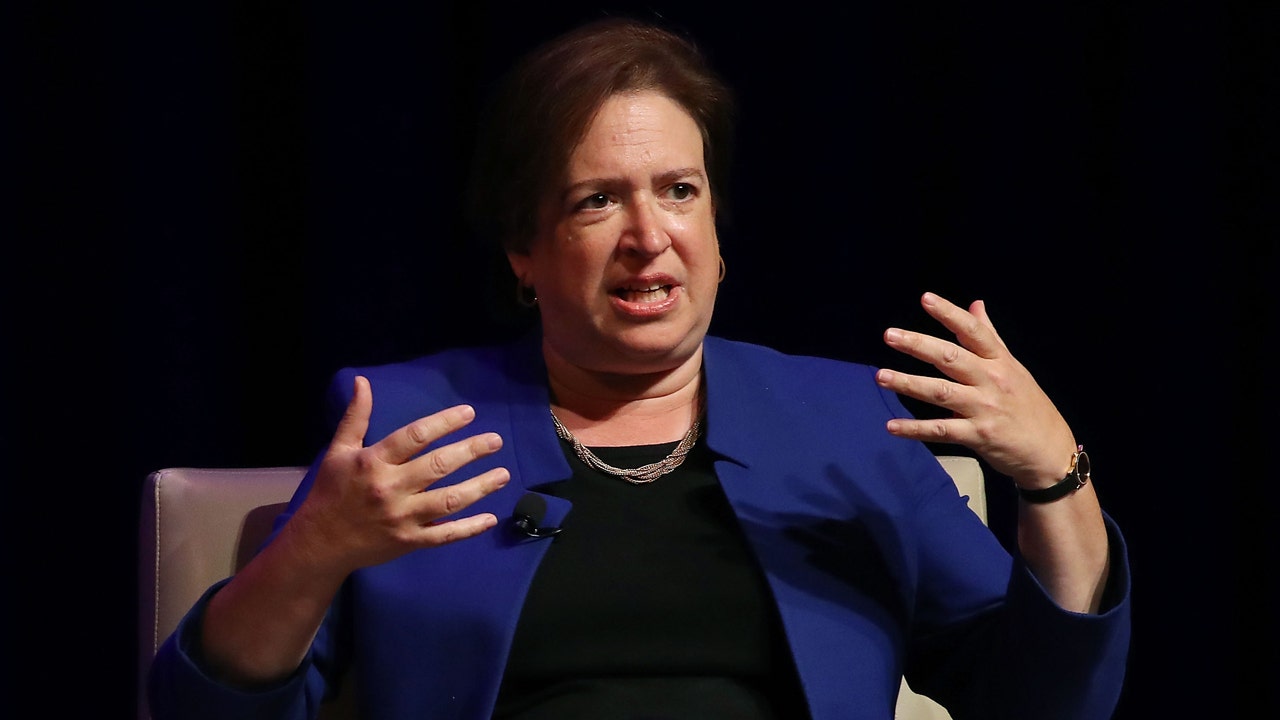
Elena Kagan under fire to recuse from Suncor climate case
Supreme Court Justice Elena Kagan and the Call for Investigation: Explained Simply
(Note: Fox News recently added a feature so you can listen to their articles! This article was written by Elaine Mallon for Fox News Digital.)
What Is This News About?
Imagine the highest court in the United States, called the Supreme Court. It has nine judges called Justices. One of them is named Elena Kagan. Recently, a team of conservative legal groups said Kagan should be investigated by a special group of senators (lawmakers) called the Senate Judiciary Committee.
Why? They think she might not be fair in an upcoming court case about climate change.
- Kagan wrote a short introduction (called a foreword) for a book that helps judges understand science.
- That book had a chapter about climate science that some politicians said was unfair and one-sided.
- Because she promoted that book, the groups say she already took a side in climate lawsuits.
Important: The groups say a judge must be like a referee in a game—totally neutral. If people could reasonably think she is not neutral, she should step aside. This is called recusing herself.
The Case at the Center: Suncor Energy v. Boulder County
This is a big court argument that will happen next term (the court’s next work period). Here’s what it’s about in kid terms:
- Some local governments in Colorado (like Boulder County) want to use their state’s rules to say: "Oil and gas companies must pay money because their products helped cause climate change (the Earth getting warmer)."
- The oil company Suncor says no.
- The Supreme Court will decide if the local governments are allowed to do this.
Kagan is supposed to help decide this case. The conservative groups say she shouldn’t because of what she wrote earlier.
What Exactly Did Kagan Write?
In her foreword to the Reference Manual on Scientific Evidence (a book for judges), she said:
- Judges will see more and more lawsuits about "climate science."
- They should use this manual to help them understand scientific evidence.
The manual had a chapter on climate science that supported ideas often used by governments when they sue oil companies. Later, Republican lawmakers and state lawyers (attorneys general) complained the chapter was biased. The organization that makes the manual (Federal Judicial Center) took that chapter out of the version given to federal judges.
Who Is Complaining and What Do They Want?
A coalition (team) of conservative legal groups, including the Judicial Crisis Network, sent a letter on Monday to the leaders of the Senate Judiciary Committee.
Their president, Carrie Severino, said:
"Justice Kagan’s conflicts of interest on climate litigation preclude her from serving as the ‘neutral arbiter’ required by her oath. By endorsing and penning a promotional preface for a judges’ reference manual featuring an overtly biased ‘climate science’ chapter, she embraced the partisan ideals and legal theories driving state and local climate lawfare. The manual’s bias was so egregious that Congress and state attorneys general called for its removal."
In simple words: Severino says Kagan liked a book that was unfair, so she can’t be a fair judge on climate cases.
The coalition wants the Senate committee to do these steps:
- Investigate whether Kagan broke federal ethics rules (rules that say judges must be fair).
- Look at whether she followed the Supreme Court’s code of conduct (behavior rules).
- Hold public hearings to talk about it.
- Demand that Kagan immediately step aside from the Suncor case.
They say public trust in courts depends on judges stepping away whenever their fairness "might reasonably be questioned."
A Look at Kagan’s Past Recusals
The letter also says Kagan has been inconsistent about stepping aside before. They give examples:
- NFIB v. Sebelius (a big health-care law case): She was a government lawyer (Solicitor General) when the law was defended, but she still helped decide the case.
- American Tradition Partnership v. Bullock: This was about campaign money, and she had argued against an earlier decision as Solicitor General.
- United States v. Briones: The Supreme Court later said she should have stepped aside because she worked on it before as a government employee.
This Isn’t the First Time the Committee Looked at Judges
The request is similar to what the Senate Judiciary Committee did in 2023 and 2024. Back then, when Democrats were in charge, they investigated other Supreme Court Justices—Clarence Thomas and Samuel Alito. Reports said those justices got fancy trips and gifts from wealthy friends. The committee held hearings and even issued subpoenas (legal orders to give information), but it didn’t lead to removal proceedings.
What Happens Next?
- On Tuesday, Kagan and another Justice, Amy Coney Barrett, are going to talk to a different group of lawmakers (House Appropriations Committee) about the court’s budget for 2027. This is rare—supreme court judges seldom speak to Congress.
- The Supreme Court’s press office hasn’t commented yet on the letter.
- The Senate committee could decide to investigate or ignore the request.
Summary
To sum up: A group of conservative lawyers wants the Senate to check if Justice Elena Kagan broke fairness rules. They say she shouldn’t help decide a climate change case because she praised a science book that later had a biased chapter removed. They point to past cases where they think she should have stepped aside. The committee has looked at other justices before. Kagan is scheduled to speak to Congress this week, and the court hasn’t responded to the complaint.
FAQ
1. What does "recuse" mean?
Recuse means a judge decides not to participate in a case because they might not be completely fair—like a referee who knows one of the players shouldn’t referee that game.
2. What is the Suncor Energy v. Boulder County case about?
It asks if local governments in Colorado can use state laws to make oil and gas companies pay for the damage those companies allegedly caused to the climate.
3. Why was the climate science chapter removed from the manual?
Republican lawmakers and state attorneys general said the chapter presented a one-sided view that favored lawsuits against energy companies. The Federal Judicial Center, which publishes the manual, took it out.
4. Who is Elena Kagan?
She is a Justice (judge) on the U.S. Supreme Court, appointed during the Obama administration, and previously served as the government’s top lawyer in the Supreme Court (Solicitor General).
5. What could happen if the Senate investigates?
The committee could hold hearings, issue subpoenas, and potentially criticize Kagan, but it likely wouldn’t remove her from the court (that requires a different process). The main goal now is to push her to step aside from the climate case.