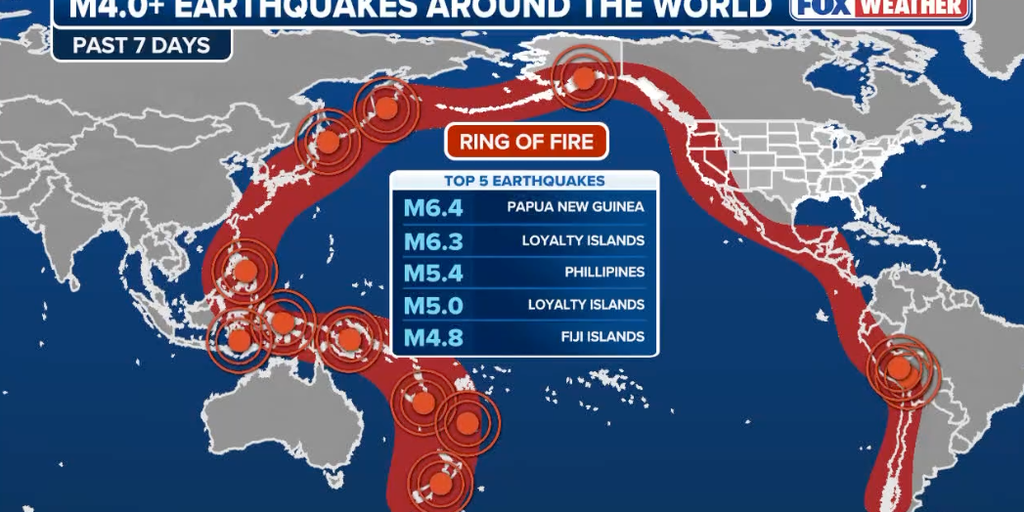
Ring of Fire Awakens: 6.3 Quake West of Loyalty Islands
Big Earthquake Near New Caledonia: A Super Simple Explainer
What Happened? (The Quake at a Glance)
Imagine the ground suddenly shaking because pieces of the Earth are rubbing together underground. That’s an earthquake! Here are the basics of the one we’re talking about:
- How strong? It was a magnitude 6.3 quake. “Magnitude” is just a number that tells us how big the shaking is (bigger number = stronger shake).
- Where? It hit about 325 miles west of the Loyalty Islands, which are part of a French territory called New Caledonia, in the southwest Pacific Ocean.
- Reporting location: The news was sent from Noumea, the main city in New Caledonia.
- When? The shaking started just after 1:45 a.m. local time.
- How deep? The “epicenter” (the spot right below the surface where the quake began) was about 6 miles under the ground.
Wait—Aren’t Earthquakes Just a Western US Problem?
Did You Know? While you may think quakes are only a western US problem, some of the largest temblors (that’s another word for earthquakes) in US history have happened in the East! So the ground can surprise us in many places, not just California.
The Pacific Ring of Fire – A Giant Rocky Necklace
This earthquake happened along something called the Pacific Ring of Fire. Let’s break it down like a story:
- It’s a 25,000-mile-long belt (like a huge ring) of volcanoes and earthquake zones that wraps around much of the Pacific Ocean.
- About 90% of the world’s earthquakes happen here. That’s almost all of them!
- You can think of it like a busy, bumpy edge of the Earth’s puzzle pieces where they grind together and cause shakes.
Important Point: The Ring of Fire is the reason why places like New Caledonia, Hawaii, and many Asian countries often feel earthquakes. If you live near the Pacific, you’re in this zone!
Any Giant Waves? (Tsunami Check)
Sometimes when the ocean floor shakes, it can create a tsunami – a series of very big and dangerous waves (like a monster wave at the beach, but way bigger). Here’s the good news from this event:
- There were no immediate reports of damage from the quake.
- The U.S. Tsunami Warning System checked and said there was no tsunami threat to these places:
- Guam
- American Samoa
- Hawaii
So people in those areas didn’t need to climb to higher ground.
The Helpful Picture
The original report included a graphic (a picture with facts) from FOX Weather. It showed all the earthquakes around the world that were magnitude 4.0 or stronger in just the past week. This helps us see that quakes are happening all the time in different spots!
Summary
Let’s recap the whole thing in a nutshell:
- A magnitude 6.3 earthquake struck near New Caledonia in the southwest Pacific.
- It happened in the Ring of Fire, where about 90% of the world’s quakes occur.
- The quake hit just after 1:45 a.m. local time, with its starting point about 6 miles below the surface.
- No damage was reported right away, and no tsunami threat was given for Guam, American Samoa, or Hawaii.
- Remember: big earthquakes aren’t just for the western US—the East has seen huge ones too!
FAQ
Q1: What does “magnitude 6.3” mean in kid words?
A: Magnitude is like a score for how much the ground shakes. A 6.3 is a strong quake that could hurt buildings if it’s near people, but this one was far from crowded areas.
Q2: What is a tsunami, and why wasn’t there one this time?
A: A tsunami is a huge wall of water caused by an underwater earthquake. Scientists looked at the data and saw this quake didn’t push the ocean enough to make dangerous waves for the nearby US territories and Hawaii.
Q3: Why is it called the “Ring of Fire”?
A: Because it’s a ring-shaped zone around the Pacific Ocean full of volcanoes (fire) and earthquakes. It stretches about 25,000 miles!
Q4: Are earthquakes really a problem in the eastern United States?
A: Yes! Even though we often hear about the western US, some of the biggest earthquakes in US history happened in the East. The ground there can still shake hard.
Q5: How do we know there was no damage or tsunami?
A: Right after the quake, officials and locals reported no immediate damage, and the special U.S. Tsunami Warning System checked the ocean and found no threat for the listed areas.