 11
11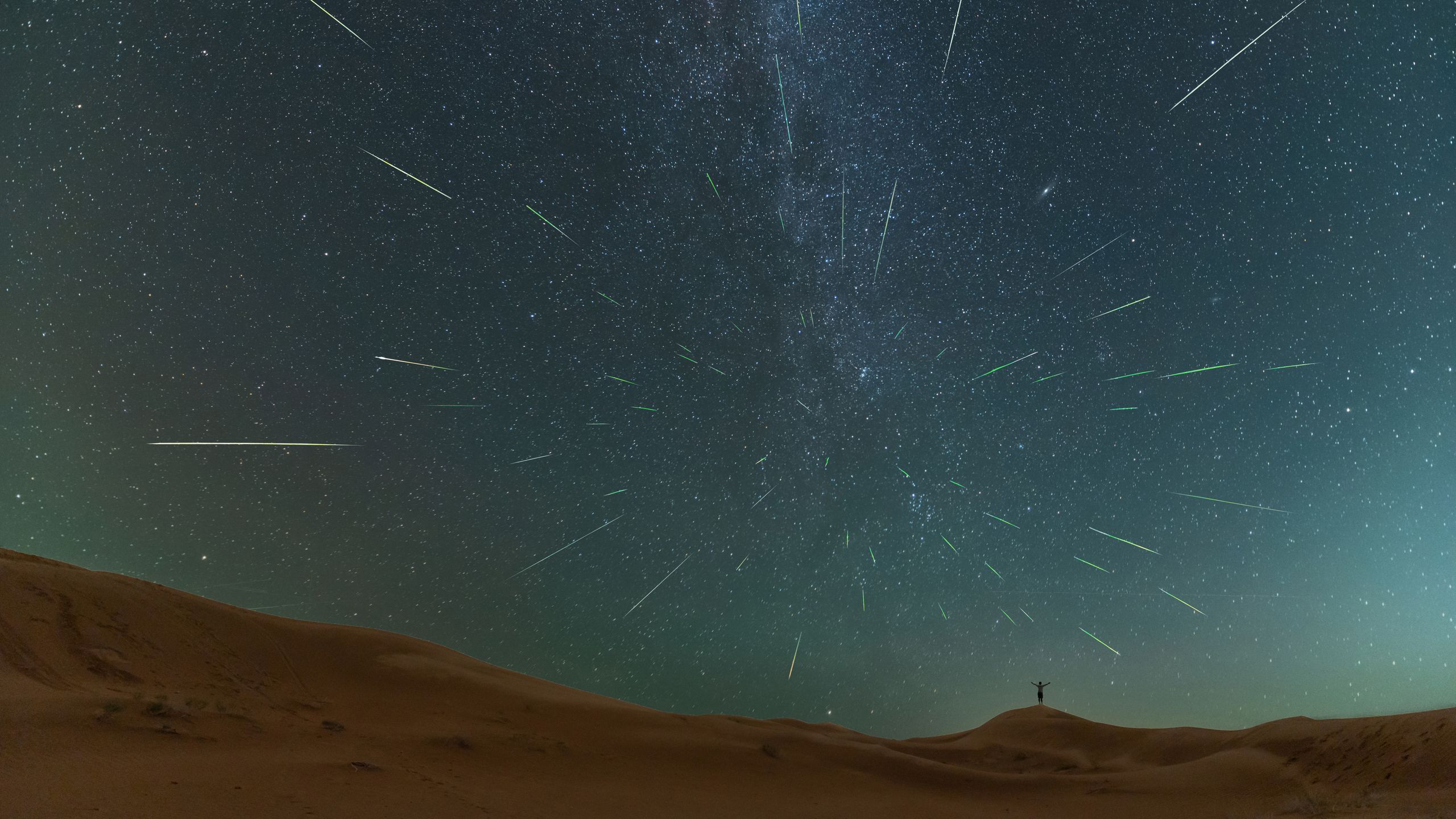
Look up at the sky! The Perseid meteor shower is finally active. This means we might see beautiful shooting stars and bright fireballs as Earth moves through a trail of space junk left behind by a giant icy space rock called comet Swift-Tuttle. Here is what you need to know.
The Perseid meteor shower in 2026 is going to be amazing. Last year was not as good because bright moonlight hid most of the shooting stars except the brightest ones.
Important Point: A new moon = dark skies = better chance to see lots of meteors!
You might even see a Perseid meteor during a special fake twilight caused by an eclipse on Aug. 12. This happens when the moon perfectly covers the sun (our parent star). But to see a meteor then, you would need to be in the path of totality (the narrow area where the sun is fully covered) at the exact moment a big meteor hits Earth’s atmosphere.
Perseid meteors can be seen after dark starting tonight. They look like they fly away from a spot in the sky called the “radiant,” which is near a red giant star called Eta Persei in the constellation Perseus.
Here is how to find the best meteors:
The Perseids are also famous for making bright green fireballs that can briefly make the night look like day. This happens when bigger pieces of space debris hit Earth’s atmosphere super fast — up to 37 miles per second (59 kilometers per second).
In the U.S., you can start looking any time after 10 p.m., but more shooting stars appear in the hours before dawn. That is when the radiant is highest in the sky.
Right after the shower starts, there are fewer meteors than at the peak. But if you see one, you are watching a meteoroid (a tiny space rock) that has been flying through space for thousands of years.
Important Point: The most meteors appear in the predawn hours of Aug. 13, when Earth goes through the thickest part of comet Swift-Tuttle’s debris stream.
Robert Lunsford of the American Meteor Society said the early and late meteors are probably the oldest because they got pushed away from the comet’s main path we meet in mid-August.
Want to take photos? You can read guides on how to photograph shooting stars, plus check out the best cameras and lenses for space photos.
Editor’s Note: Got a Perseid photo? Send it with your name and location to spacephotos@space.com to share with readers!
The Perseid meteor shower is active and will peak overnight Aug. 12–13 under dark new moon skies, with up to 100 meteors per hour. Look for Perseus in the northwest, then scan 40 degrees above it. Best viewing is after 10 p.m., especially before dawn and away from lights. Early/late meteors are the oldest space travelers, and the shower comes from comet Swift-Tuttle’s debris.
Q: What is a shooting star?
A: It is not a star! It is a small space rock (meteoroid) that burns up brightly when it hits Earth’s atmosphere.
Q: Why is 2026 better than last year for Perseids?
A: Last year, bright moonlight hid most meteors. This year, a new moon keeps the sky dark.
Q: Do I need a telescope to see them?
A: No! Your eyes are best. Just find a dark spot and look up.
Q: What is a fireball?
A: A very bright meteor, often green for Perseids, that can light up the night like daytime.
Q: Can I see Perseids during the eclipse?
A: Only if you are in the total eclipse path at the exact right moment — very unlikely, but possible.


