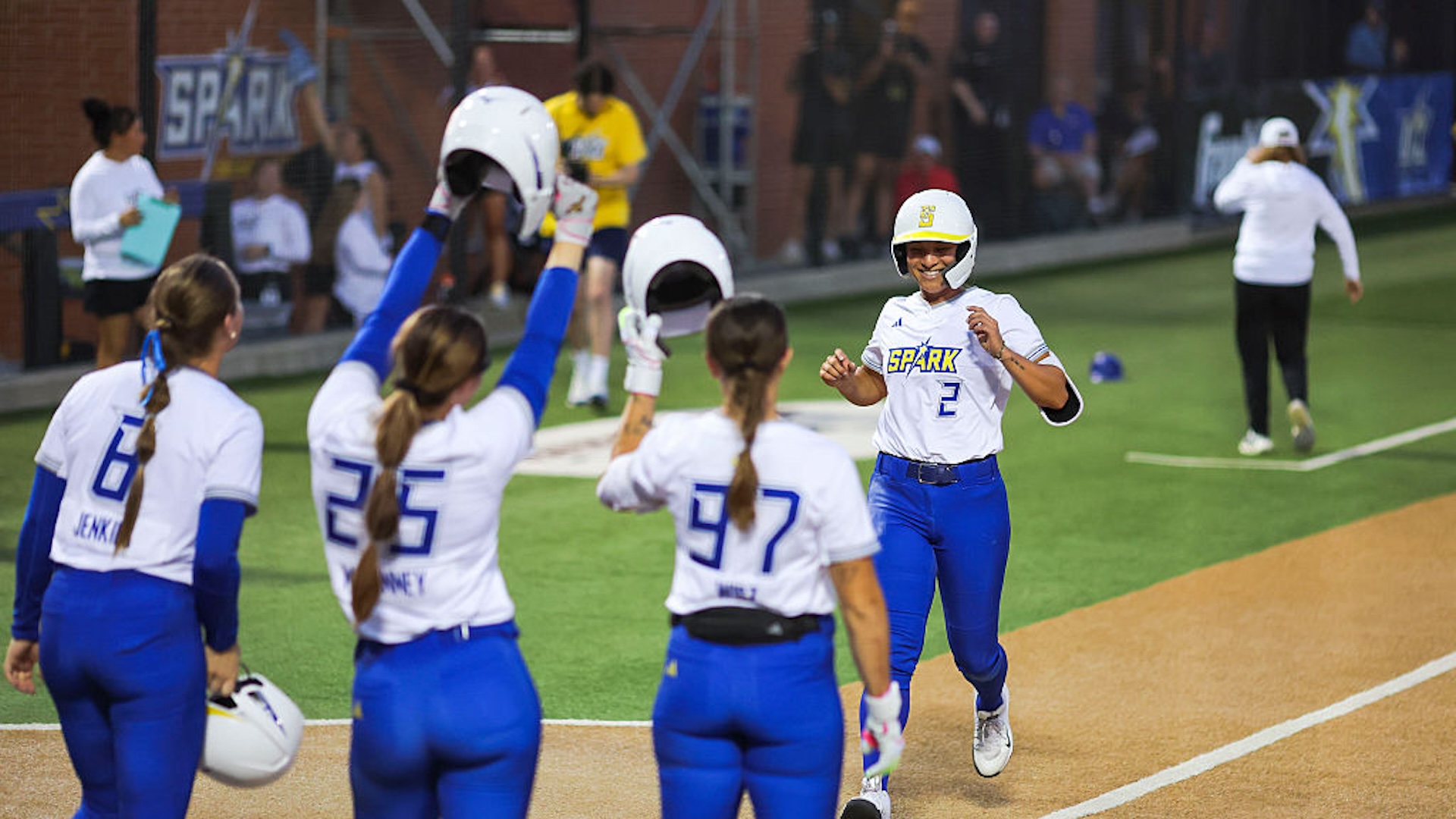
AUSL’s Bold Plan To Do What Other Pro Softball Leagues Couldn’t
The AUSL: A Beginner’s Guide to the New Professional Women’s Softball League
Why Pro Softball Has Been a Tough Game to Keep Going
Imagine running a sports league with only two full‑time workers and hardly any money. That’s what the old National Pro Fastpitch (NPF) faced.
- The NPF started in 2004.
- Cheri Kempf was its commissioner (the top boss) and one of only two full‑time employees.
- It didn’t have TV contracts or a big budget.
- When the COVID‑19 pandemic canceled the 2020 and 2021 seasons, the league shut down for good.
Before the NPF, there was the Women’s Pro Softball League (1997–2001). College softball grew popular after it became an Olympic sport in 1996 and the U.S. won gold, so more universities funded teams. Pro leagues tried to follow but kept failing.
Important Point: Every earlier try at a pro softball league failed because of weak money and no TV coverage.
How the AUSL Came to Be
Around when the NPF ended, Jon Patricof started a company called Athletes Unlimited (AU) in 2020. Its goal: build pro women’s leagues in many sports.
- AU ran a 5‑week softball season in 2020.
- It added a 2‑week event called AUX in 2022.
- In 2025, it launched the Athletes Unlimited Softball League (AUSL).
- First, 4 teams traveled around the country to test cities.
- For 2026, the league grew to six teams with home bases:
- Carolina Blaze (Durham area)
- Chicago Bandits
- Utah Talons (Salt Lake City)
- Texas Volts (Austin)
- Oklahoma City Spark
- Portland Cascade
- The team season lasts two months, then the best 45 players play a 4‑week individual contest called the All‑Star Cup.
Cheri Kempf joined AU and is now the AUSL’s chief broadcast officer. She says AU has a financial foundation the NPF never saw.
Why This League Might Actually Survive
Other women’s sports leagues—basketball (WNBA), soccer (NWSL), hockey (PWHL)—have become stable. Softball is now copying that model.
The AUSL’s big advantages:
- Strong financial backing from its parent company.
- TV deals with major networks.
- Investment from Major League Baseball (MLB)—the top men’s baseball organization.
- Softball’s rising popularity.
Important Point: MLB bought more than 20% ownership (called “equity”) in the AUSL and put in over $10 million. ESPN will broadcast 47 regular‑season games in 2026. Past leagues never had this.
How Players Get Paid and Supported
Kim Ng (the AUSL commissioner and former MLB general manager) said in an interview that the average player salary is about $40,000 for the season, plus bonuses for the All‑Star Cup.
- The league owns all six teams as one group (like the PWHL), so pay is negotiated with the league, not individual teams.
- Players receive:
- Year‑round training facilities
- Health insurance
- Childcare
- Support during pregnancy
- They fly on regular commercial planes; cities were chosen partly for nearby major airports.
Players do not have a formal union (a group that bargains together), but they meet weekly with league leaders through a player committee. Keilani Ricketts said they feel heard for now.
Life as a Pro Softball Player Today
Keilani Ricketts (34, pitcher for Carolina Blaze)
- Won a college title in 2013, then played in the NPF and a Japanese league.
- She says old leagues sometimes felt like “club ball” (casual, not truly pro).
- In the AUSL: “They really just made us feel like we were actually professional athletes.”
- She notes that when she was in college, players were nervous about pro ball because teams would fold. Now top college stars want in. She was the oldest player drafted in 2025 (6th round by the Blaze) and has over a decade of pro experience.
Hannah Flippen (Utah Talons infielder)
- The two‑month season isn’t a full‑time job yet.
- In the offseason she works part‑time as a neuro technician (helps people with brain conditions like Alzheimer’s).
- Many players coach, give lessons, or have side jobs to pay bills.
- She says: “We’re still not completely where we want to be financially, but we’re definitely in a better spot.”
TV, MLB, and the College Pipeline
- In 2026, ESPN airs 47 regular‑season games plus the championship series.
- The first championship game will be on ABC—the first time pro softball appears on free broadcast TV.
- The 2025 championship on ESPN averaged 230,000 viewers.
- MLB’s cash and strategic help are key, says Patricof.
College softball is exploding in popularity:
- The 2026 Women’s College World Series averaged 1.6 million viewers (up 20% from 2025).
- Texas’s title win over Texas Tech drew 2.5 million—the most‑watched college softball game ever.
New NIL deals (Name, Image, Likeness—meaning college athletes can get paid for being famous) let stars like:
- NiJaree Canady (now with Texas Volts) sign seven‑figure deals and become national brands.
- Karlyn Pickens (No. 1 draft pick in 2026, throws for Carolina Blaze) went viral for a 79.4‑mph pitch and has New Balance and Rawlings endorsements.
Kempf notes players now enter the pro league already used to earning money, pushing toward fairer pay versus male athletes.
Summary
- Pro softball had a shaky past; the NPF folded after COVID due to tiny staff and no money.
- The AUSL launched in 2025, expanded to 6 home teams in 2026, with a two‑month season + All‑Star Cup.
- It has MLB investment (>20% share, >$10M) and ESPN/ABC TV deals—game‑changers.
- Average pay ~$40k + bonuses; players get health, training, and family support.
- Stars like Ricketts and Flippen show the leap in professionalism, though side jobs remain common.
- College viewership records and NIL money feed talent into the league.
- AUSL payrolls still can’t match big college NIL budgets, but the direction is positive.
FAQ
1. What does “equity” mean in the MLB investment?
Equity is ownership share. MLB owns more than 20% of the AUSL, so it has a major stake in the league’s success.
2. Why did older softball leagues like the NPF fail?
They lacked money, TV contracts, and stable backing. The NPF had only two full‑time staff and folded after pandemic‑canceled seasons.
3. What is the All‑Star Cup?
After the two‑month team season, the top 45 players compete individually for four weeks in a special skills and performance competition.
4. Do AUSL players have a union?
Not yet. They have a player committee that meets weekly with league executives, but no formal union is in place.
5. Can I watch AUSL games on regular TV?
Yes! In 2026, games air on ESPN, CBS Sports Network, MLB Network, and the championship final on ABC (free broadcast channel).