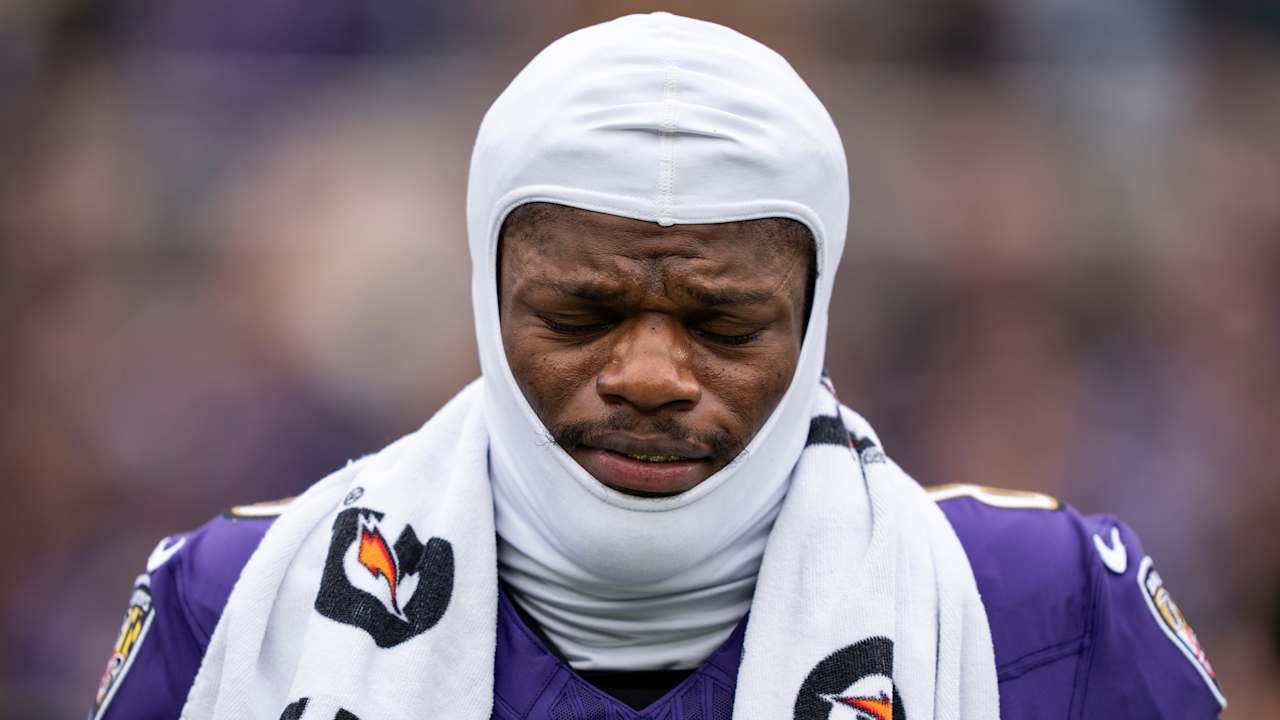
Two-time No.2 Lamar Jackson plummets 67 spots to 69 in 2026 Top 100
McKinney’s 2025 Football Season: A Simple Explanation
Meet McKinney and His 2025 Stats
At the end of the 2025 season, here is the "report card" of a player named McKinney who plays for the Green Bay Packers. He played in 16 games, and these are his main numbers:
- Games played: 16 (how many matches he was in)
- Tackles: 107 (times he grabbed and stopped the player holding the ball)
- Sacks: 1 (he tackled the quarterback—the thrower—behind the line where the play starts)
- Passes Defensed (PD): 10 (he swatted away or blocked 10 thrown balls so they weren’t caught)
- Interceptions (INT): 2 (he caught the ball thrown by the other team)
- Forced Fumbles (FF): 1 (he hit the ball carrier so hard they dropped the ball)
Was He Less Shiny Than Before?
In his very first season with Green Bay, McKinney grabbed 8 interceptions—that’s like catching the other team’s throw eight times! That looked super flashy. In 2025, he only caught 2 interceptions, so he might not have seemed as exciting. But here’s the big secret:
Important Point: Even with fewer interceptions, McKinney was just as vital (important) for the Packers as he was in that 8-interception year.
How Good Was He at Covering Receivers?
When McKinney is on defense, sometimes his job is to stick close to a receiver (the player trying to catch the ball). This is called "coverage." Let’s see how he did:
- The quarterback threw the ball 29 times toward the player McKinney was guarding (those throws are called "targets").
-
McKinney knocked away or caught 10 of those passes (his 10 PD + 2 INT = 12? Wait, note: PD and INT are separate; PD means defensed but not caught, INT means caught. Original says 10 PD and 2 INT, total 12 plays on 29 targets? Actually original says "10 passes defensed on 29 targets equated to a 34.5% ball hawk rate". Usually ball hawk rate includes INT+PD / targets. 10 PD + 2 INT = 12 / 29 = 41.4%, not 34.5%. Hmm careful: The original says "10 passes defensed on 29 targets equated to a 34.5% ball hawk rate". That implies they count only passes defensed (PD) for ball hawk rate? Or maybe they define ball hawk rate as PD / targets? 10/29 = 34.48% ~34.5%. So they are not including INT in that rate? But they said "10 passes defensed on 29 targets equated to a 34.5% ball hawk rate, a mere 2.2% off his 2024 All-Pro campaign." So we must preserve exactly: 10 PD on 29 targets = 34.5% ball hawk rate. We should not add INT to that calculation. So we say: His 10 passes defensed out of 29 targets gives a 34.5% ball hawk rate. We can explain ball hawk rate as percentage of targeted passes that he defensed (broke up). We’ll keep it precise.
- This 34.5% ball hawk rate is only 2.2% lower than his 2024 All-Pro campaign (when he was named one of the best players in the league).
- When quarterbacks threw at him, they got a passer rating of just 40.0. (Passer rating is a score for the quarterback’s success; lower means the defender won.)
- The receiver he covered was only 2.6 yards away from him on average when the ball arrived (that’s like two big steps—very close!).
- Both the 40.0 passer rating and 2.6 yards separation are the best he has ever done in his career (career bests).
Because of these awesome numbers, teams really shouldn’t throw the ball in his direction.
Stopping the Run Like a Boss
If last year (2024) is any clue, teams should also think again before running the ball toward McKinney. In 2025, he was even better at stopping runs:
- He received a PFF run defense grade of 82.5 for the ’25 season.
- PFF (Pro Football Focus) is a group that watches plays and gives grades like a report card. Higher is better.
- This 82.5 grade is his personal best so far in his career.
Important Point: McKinney is a double threat—great against passes AND great against runners!
NFL Pro Insight: The Coverage King
The official NFL Pro site shared a special note about McKinney:
- In 2025, he allowed only 0.3 yards per coverage snap. A "coverage snap" is one play where he is guarding a receiver.
- Among all defenders who played at least 300 coverage snaps, his 0.3 yards was the smallest (meaning he gave up almost no space at all).
- He also allowed fewer than 10 yards in coverage in nine different games. That means in those games, the total catching space he permitted was tiny!
Summary
Let’s recap what we learned about McKinney’s 2025 season:
- He played 16 games with 107 tackles, 1 sack, 10 passes defensed, 2 interceptions, and 1 forced fumble.
- Even though he didn’t have as many interceptions as his 8-pick first year, he was just as crucial for Green Bay.
- His pass coverage was elite: 10 PD on 29 targets = 34.5% ball hawk rate (just 2.2% off his 2024 All-Pro mark), a career-best 40.0 passer rating allowed, and career-best 2.6 yards separation.
- His run defense got a career-best PFF grade of 82.5.
- NFL Pro data shows he gave up only 0.3 yards per coverage snap (best among busy defenders) and held under 10 yards in nine games.
Bottom line: Don’t throw at McKinney, and maybe don’t run his way either!
FAQ
Q1: What does "passes defensed" mean in simple words?
A: It’s when a defensive player blocks, tips, or swats a thrown football so the other team’s receiver can’t catch it—like shooing away a bug.
Q2: Why is a low passer rating good for McKinney?
A: Passer rating measures how well the quarterback performed. A low rating means the quarterback struggled against McKinney, which means McKinney did his job perfectly.
Q3: What is PFF and why does the grade matter?
A: PFF (Pro Football Focus) is a company that watches every play and gives players scores like in school. A higher grade (like 82.5) shows the player was really good at that skill—in this case, stopping runs.
Q4: What is a "coverage snap"?
A: A snap starts each play. A coverage snap is a play where McKinney’s main task is to stay close to a receiver and stop them from catching the ball.
Q5: Did McKinney have a bad year because he only had 2 interceptions?
A: No! He was just as vital as his 8-interception season. He actually broke up more passes and stayed tighter on receivers than ever before.