 11
11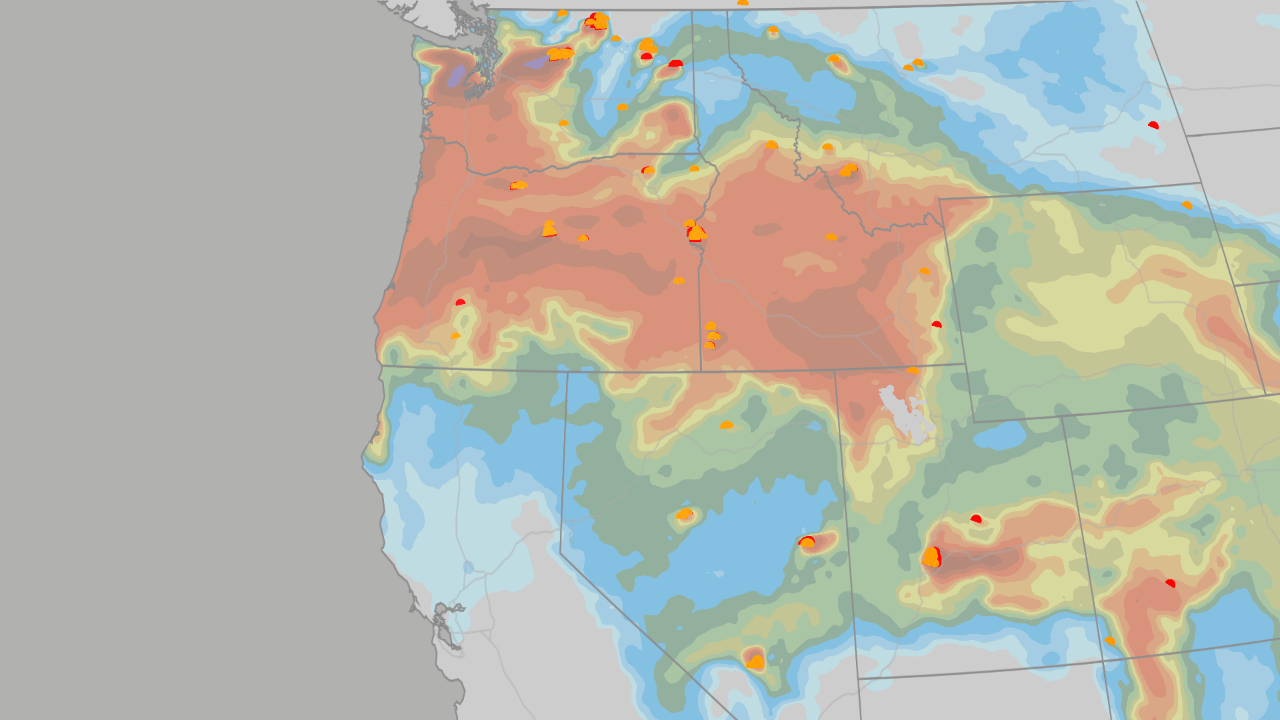
Imagine a giant campfire burning across several states, and the wind is blowing all that smoke right toward big cities like Seattle and Portland. That’s exactly what’s happening right now in the Pacific Northwest. Dozens of wildfires are sending thick smoke into western Washington and Oregon, making the air unhealthy to breathe. On top of that, a heat wave is pushing temperatures near 100°F in some areas.
The fire hotspots right now:
Quick Fact: The fires are mainly in the eastern two-thirds of Washington and Oregon – the drier, more forested side of the Cascade Mountains.
Offshore winds (winds blowing from the east/northeast) are pushing smoke westward toward the coast:
| Area | Cities Affected |
|---|---|
| Washington’s I-5 Corridor | Seattle, Tacoma, Olympia |
| Oregon’s Willamette Valley | Portland, Salem, Corvallis, Eugene |
| Other spots | Boise, ID (ongoing) • Salt Lake City, UT (possible) |
The same weather pattern trapping the smoke is also cranking up the heat:
Heat + Smoke = Double Trouble: Hot weather makes air pollution worse, and smoke makes it harder for your body to cool down.
Think of smoke like invisible splinters for your lungs:
| Color | Level | What to Do |
|---|---|---|
| Green | Good | Normal activities OK |
| Yellow | Moderate | Sensitive people: take it easy |
| Orange | Unhealthy for Sensitive Groups | Kids, elderly, pregnant, heart/lung conditions: limit outdoor time |
| Red | Unhealthy | Everyone: limit outdoor time, exercise indoors |
| Purple | Very Unhealthy | Everyone: avoid outdoor activity |
| Maroon | Hazardous | Emergency conditions – stay inside! |
IMPORTANT: At Code Orange or worse, sensitive groups should stay indoors. At Code Red or worse, EVERYONE should limit outdoor time. Walk pets briefly. Exercise inside.
| What’s Happening | What It Means | What to Do |
|---|---|---|
| 30+ large fires in OR/WA | Smoke plume heading west | Check air quality daily |
| Offshore winds through Wed | Seattle, Portland, Eugene get smoked | Limit outdoor time if Code Orange+ |
| Heat wave (90-100°F) | Double stress on body | Stay cool, hydrated, inside |
| Thursday shift | Smoke moves to Rockies | Travel plans to Yellowstone/Aspen? Check air |
| Weekend relief | Cooler, possible storms | Watch for flash floods on burn scars |
Bottom line: This is a smoke + heat double whammy. Treat unhealthy air days like a snow day – stay in, filter your air, check on vulnerable neighbors.
PM2.5 particles are 2.5 microns or smaller – that’s about 1/30th the width of a human hair. They bypass your nose/throat defenses and go straight to deep lung tissue and your bloodstream.
No. Cloth and surgical masks don’t filter PM2.5. You need a properly fitted N95 or KN95 respirator. Even then, it must seal tightly to your face – facial hair breaks the seal.
Keep it very short. Sensitive groups (which includes pets!) should minimize exposure. Quick potty break only – no long walks or fetch sessions.
Sometimes a little. Thick smoke can lower daytime highs by a few degrees. But the smoke itself stresses your heart and lungs, making it harder for your body to handle the heat that remains. It’s not a real break.
Both. Rain helps firefighters and clears smoke. But on freshly burned hillsides, even light rain can cause dangerous flash floods and debris flows (mudslides). And "dry lightning" storms can start new fires. It’s a mixed bag.
Stay safe, stay inside when the air is bad, and check on your neighbors!