MLB Trade Deadline Buzz: Yankees Want a New Catcher, and the Pirates and White Sox Make a Swap
Imagine your school project group can trade members with other groups until a certain last day. In baseball, that last day is called the trade deadline, and it’s on August 3. Right now, it’s still a few weeks away, and the “standings” (which team has won how many games) are a bit of a messy mix. But some teams that are doing well (called contenders) and some that might sell players (called sellers) are already making plans. So, we hear rumors about possible trades, especially now that we’re well into July. Saturday was no different—here’s the latest news in kid-friendly language.
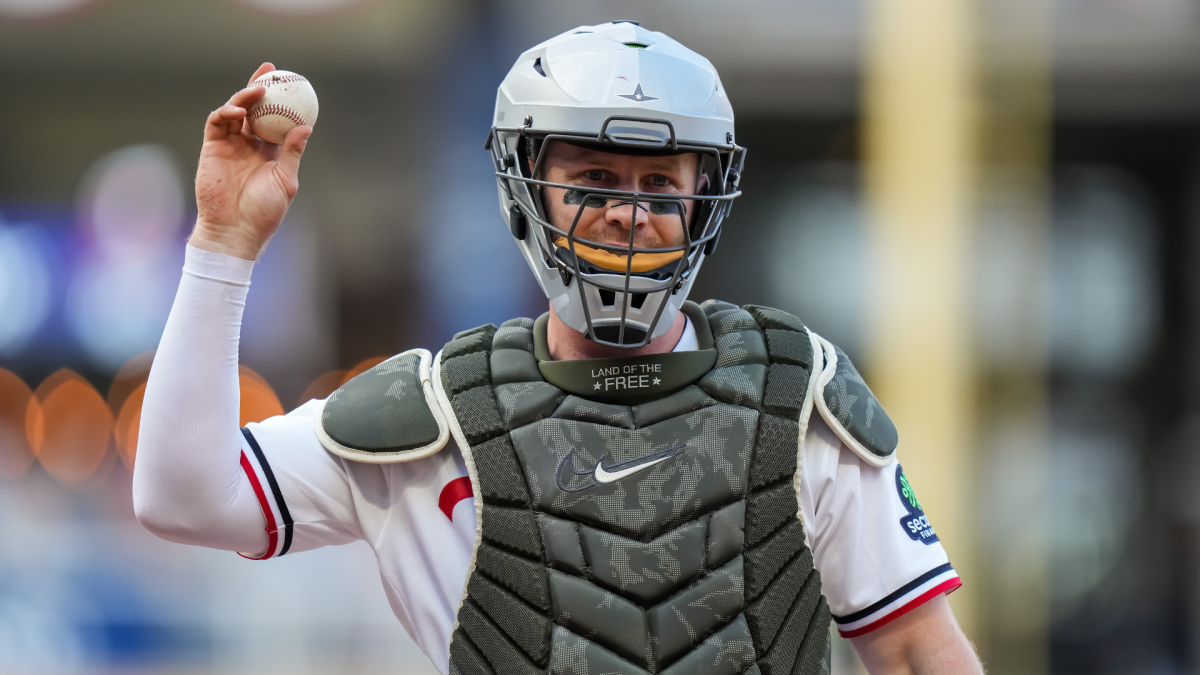
Yankees Scouting Twins Catcher
The New York Yankees are a famous baseball team. They really need help at a position called catcher. Think of the catcher as the player who squats behind home plate and catches the ball from the pitcher. It’s a super important job, and teams usually don’t like to change their catcher in the middle of the season. But the Yankees are really desperate.
Why? Because this season, their catchers (mostly a player named Tyler Wells) have only “hit” (batted) at a level of .175/.252/.272. Let’s translate those numbers:
- .175 batting average: They get a hit only about 17.5 times out of 100 tries.
- .252 on-base percentage: They reach base (by hit or walk) about 25.2% of the time.
- .272 slugging: They don’t hit for much power (like few extra-base hits).
That’s a huge lack of production, even for a catcher (where teams expect less hitting because the job is so tough).
What the Yankees Are Doing
They sent a scout (a person who watches players to judge if they’re good) to a game between the Angels and the Twins on Friday night. The scout was there to watch Minnesota Twins catcher Ryan Jeffers. This was reported by LaVelle E. Neal III.
Jeffers, age 29, was coming back from an injury to a small bone in his wrist called the hamate bone. He had been out since May 18. In that game, he got 1 hit in 4 tries (written as 1 for 4) and that hit was a double (a hit that lets him safely reach second base).
His season numbers are way better than the Yankees’ catchers:
- .294/.408/.540 (remember, higher is better)
- 7 home runs in 38 games
- More walks (free trips to first base) than strikeouts (when you miss the ball three times and are out)
For his whole career (seven seasons in MLB), Jeffers has an OPS+ of 109. OPS+ is a simple score: 100 is average, so 109 means he’s about 9% better than an average hitter. Also, after this season, he can become a free agent—meaning he can sign with any team he wants.
Important: The Twins might not want to trade Jeffers! They are only 3 games behind the first place in their division (AL Central) and just 1 game away from a wild‑card spot (a backup way to reach playoffs). But Jeffers would clearly help the Yankees. Another team, the Tampa Bay Rays, also sent a scout to watch him on Friday (reported by Darren Wolfson).
Pirates and White Sox Swing Trade with Draft Implications
Now to a trade that already happened on Friday evening between the Pittsburgh Pirates and the Chicago White Sox.
The Pirates got:
- Jacob Gonzalez: A 24‑year‑old rookie (first‑year player) who plays infield (mostly shortstop, a defensive spot). He was the 15th overall draft pick back in 2023. He is expected to be the regular shortstop because the Pirates’ young star Konnor Griffin is out with a thumb injury.
- Brandon Eisert: A 28‑year‑old left‑handed relief pitcher (someone who throws to help finish games). His career ERA+ (another adjusted score where 100 is average) is 88 (so a bit below average) and his FIP (a stat that measures pitching without help or hurt from fielders) is 4.52 over three seasons.
In return, the Pirates gave the White Sox:
- The 34th overall pick in Saturday’s MLB Draft. The draft is like a school talent show where teams pick new young players from colleges and high schools.
- Jaden Woods: A 24‑year‑old minor‑league relief pitcher. In the minor leagues (teams below MLB where players practice), Woods has an ERA (earned run average, lower is better) of 4.61, with 218 strikeouts in 173 and 2/3 innings over four seasons. This year he reached triple‑A, which is the highest step just below the big leagues.
How the Trade Went Down
- The Chicago White Sox sent Jacob Gonzalez and Brandon Eisert to the Pittsburgh Pirates.
- The Pittsburgh Pirates sent the 34th overall draft pick and Jaden Woods to the Chicago White Sox.
- MLB approved the deal because competitive‑balance picks are allowed to be traded.
MLB rules allow trading of competitive‑balance picks—special draft choices given to smaller‑market teams to help them compete. The White Sox get that 34th pick and the bonus pool space (extra money to sign draft picks). Now the White Sox hold the No. 1, No. 34, and No. 41 picks on Saturday.
Key Callout: Unlike normal draft picks, competitive‑balance picks can be traded! That’s how the White Sox got an extra high pick.
Summary
To sum up everything we learned:
- The Yankees are badly needing a catcher and are watching Ryan Jeffers of the Twins, but the Twins are still fighting for playoffs so may keep him. The Rays are also interested.
- The Pirates and White Sox made a trade: Pittsburgh got two players (Gonzalez and Eisert) to help now, while Chicago got a valuable draft pick (No. 34) and a young pitcher (Woods). This shows teams are already busy even before the Aug 3 deadline.
FAQ
Q1: What is the MLB trade deadline?
A: It’s a calendar date (August 3 this year) by which teams must finish trading players with each other. After that, swaps are very limited until next season.
Q2: Why is the catcher position so special?
A: The catcher does a hard job: catching fast pitches, guiding the pitcher, and defending home plate. Because it’s so tough, teams usually accept weaker hitting from catchers—but the Yankees’ hitting is even lower than normal.
Q3: What do stats like .294/.408/.540 mean?
A: Those are batting numbers: first is batting average (how often they hit), second is on‑base percentage (how often they reach base), third is slugging (power). Higher numbers mean better hitting.
Q4: What is a competitive‑balance pick?
A: It’s a special draft pick given to teams in smaller markets (cities) to help them get talent. Unlike most draft picks, MLB lets teams trade these picks.
Q5: What is triple‑A?
A: Triple‑A (written as AAA) is the highest level of the minor leagues. Players there are very close to being ready for the main MLB teams.