 11
11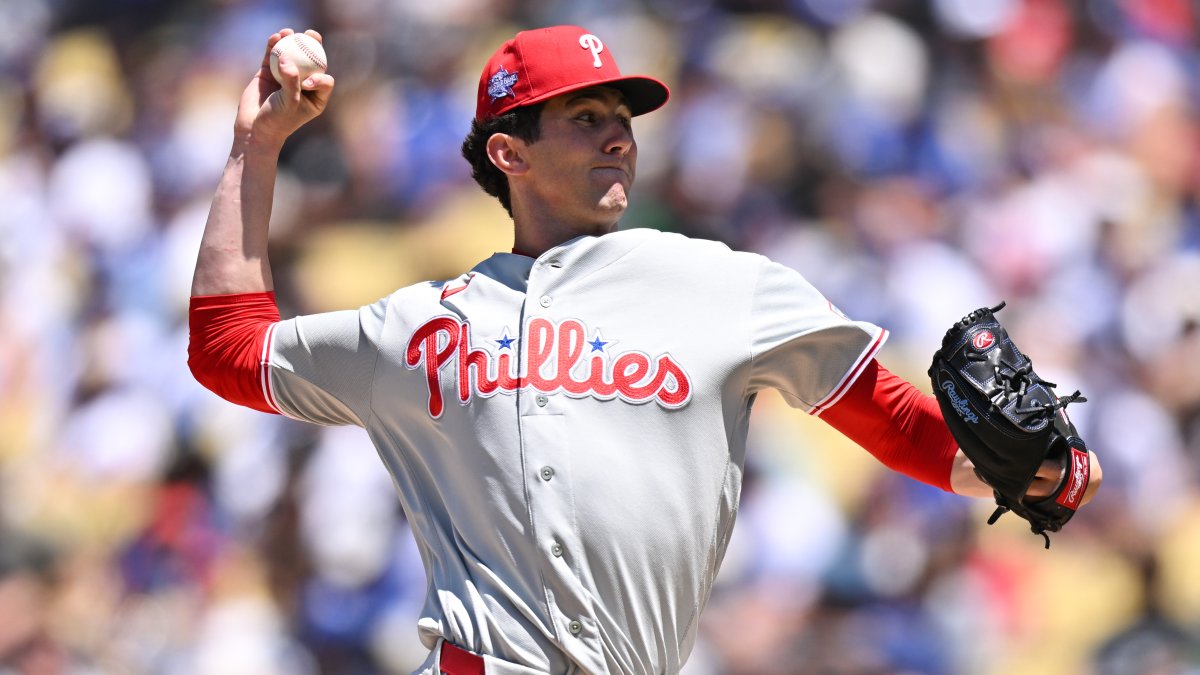
Imagine you’re learning to ride a bike. You wobble, fall, scrape your knee, but then you practice on a quiet street (the minor leagues) until you’re steady again. That’s basically what happened with Andrew Painter, the Philadelphia Phillies’ top young pitcher. After a rough start in the big leagues, he went back to the minors to fix things. Now, just 44 days later, he’s getting another shot.
Let’s break down the whole story in plain English.
Think of the major leagues as the hardest test in school. Painter took the test 14 times and got a low grade. Here’s the report card:
| Stat | What It Means | Painter’s Number |
|---|---|---|
| ERA | Earned Run Average — how many runs a pitcher gives up per 9 innings. Lower is better. | 7.06 (Very high) |
| Home Runs Allowed | Batters hit the ball out of the park a lot. | 14 in 65 innings |
| Opponent Batting Average | How often hitters get a hit off him. | .316 (Hitters looked like All-Stars) |
| Fastball Results | His best pitch (throws mid-to-high 90s mph). | .404 avg / .660 slugging (Hitters crushed it) |
IMPORTANT POINT
The Phillies weren’t winning when he pitched. His confidence was shaken, and he needed to go back to Triple-A Lehigh Valley (the "quiet street") to reset without the pressure of the big leagues.
Since Painter left, the Phillies’ 5th starter spot (the "weak link" in the rotation) has been a mess:
Before the wheels fell off, Painter had a 3-start stretch where he looked like the real deal:
Then came the Dodgers in LA — a nightmare matchup. He gave up 2 homers in 3 ⅓ innings. Over his next 11 ⅔ innings, he allowed 5 more homers. The "long ball" (home runs) was his Achilles’ heel. Down to Triple-A he went.
In 5 starts for the Iron Pigs (Lehigh Valley), things looked much better:
PROGRESS ALERT
This isn’t just luck. He made real mechanical changes.
His secondary pitches (the non-fastballs) started shining:
Bonus: His fastball touched 99 mph in the minors. The velocity is there; the command and shape are improving.
There’s no single confirmed reason, but it’s likely a mix of these:
Painter will start or follow an opener Friday at Camden Yards. The matchup actually favors him:
The Key Battle: Can Painter’s improved splitter and fastball command neutralize Baltimore’s left-handed bats? That was his kryptonite before.
Painter’s road has been rocky:
Friday isn’t just another start. It’s a prove-it moment. Can the "quiet street" practice translate to the "highway" of the majors? The Phillies’ rotation depth — and Painter’s future — might depend on it.
Triple-A is the highest level of the Minor Leagues — one step below the Major Leagues. Players go there to develop skills, recover from injury, or fix mechanical issues without the intense pressure of the big leagues. It’s like "finishing school" for pros.
An "opener" is a relief pitcher who starts the game but only plans to pitch 1-2 innings. The team then brings in a "primary pitcher" (who would normally be the starter) to go the bulk of the innings. It’s a strategy to match up better against the top of the opponent’s lineup.
A splitter (split-finger fastball) is gripped with the fingers spread wide on the ball. It looks like a fastball out of the hand but suddenly drops sharply near the plate. Painter’s splitter now has more velocity, tighter spin, and less vertical break. This makes it harder to hit and a perfect partner to his fastball (they "tunnel" — look the same until the last split second).
This is the last day during the season when teams can trade players without them having to clear waivers. Contending teams (like the Phillies) often trade prospects for veteran help. If Painter pitches well, he becomes a more valuable trade chip — or proves the Phillies don’t need to trade for a starter.
It’s a procedure to reconstruct the ulnar collateral ligament (UCL) in the elbow using a tendon from elsewhere in the body. It’s very common for pitchers. Recovery typically takes 12-18 months. Painter had it, missed all of 2023, and is still building back his innings and feel.