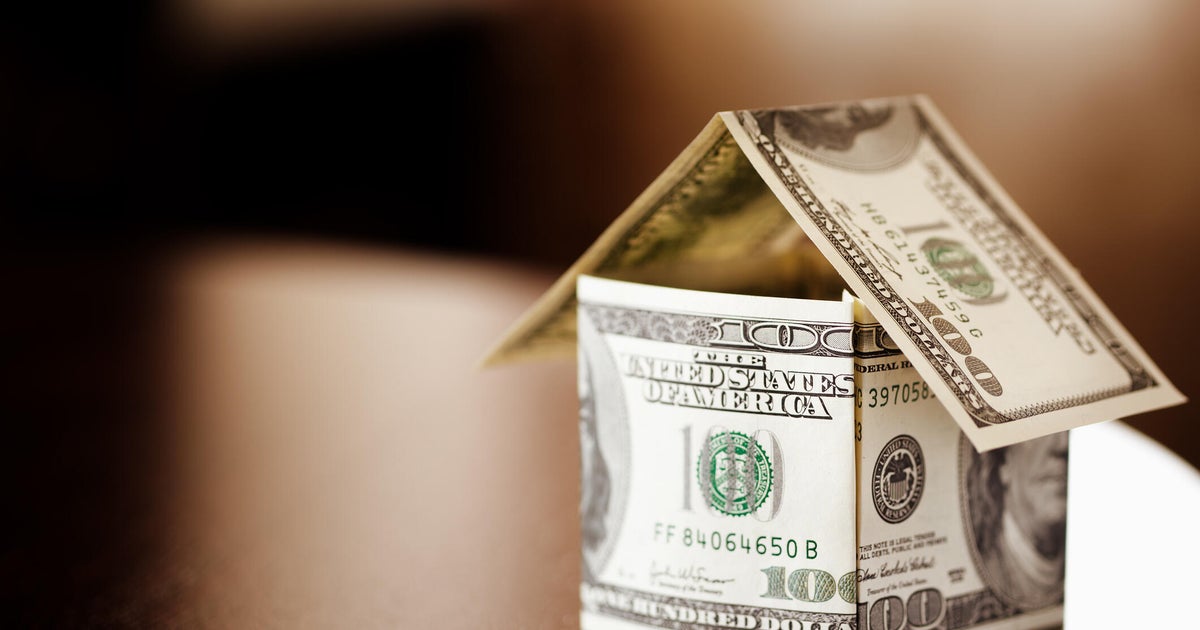
U.S. Home Prices Skyrocket to Unprecedented All-Time High
Why Buying a Home in the U.S. Is More Expensive Than Ever: A Super Simple Guide
The Big News: Houses Cost More Than Ever
Right now, a big plan to make houses cheaper (called a "housing affordability bill") is stuck in political pause. Meanwhile, the price of homes in the U.S. has climbed to the highest ever recorded.
Think of it like this: if last year a toy cost $100, this year the same toy costs a bit more. That’s what’s happening with houses, but with much bigger numbers.
According to new numbers from the National Association of Realtors (NAR) – a group that tracks home sales – the middle price (called "median") for homes that already exist was $440,660 in June. That’s up 1.8% from $432,700 one year before. And prices have gone up for 36 months in a row – that’s three whole years without a break!
Important Point: Home prices have now risen for 36 straight months, hitting an all-time high of $440,660 median in June.
Ershang Liang, an economist (a person who studies money and markets) at PNC Economics Research, said: "Housing affordability remains low under slowing wage growth and stronger home price growth." In kid words: "People’s paychecks aren’t growing fast, but house prices are, so buying a home is still very hard."
What Does the Data Say? (The NAR Snapshot)
The NAR gave us a bunch of facts about different kinds of homes and places. Here are the highlights:
- Median price for existing single-family homes: $446,400
- Median price for condominiums and co-ops (think apartment-style homes): $380,000
- Single-family home prices by region:
- Northeast: $564,800
- Midwest: $346,600
- South: $377,700
- West: $633,600
These numbers show that where you live makes a big difference in price!
Why Are Homes So Hard to Afford?
For many years, home prices have been like a balloon slowly filling with air. The only time it popped was during the big housing crisis around 2008–2009 that caused a worldwide money mess. But when the pandemic hit, the U.S. Federal Reserve (the country’s bank boss) cut interest rates (the extra cost of borrowing money) to help the economy. That made homes super cheap to borrow money for, and prices shot up like a rocket.
Today, even small "starter homes" meant for first-time buyers are too pricey for most Americans.
- Fewer than 4 out of 10 renting families can afford a typical starter home priced around $200,000 (according to LendingTree, a money company).
- To buy the average home, a family needs to earn about $117,000 a year (found by Redfin, another real estate company).
Lawrence Yun, the chief economist at NAR, put it simply: "Without a doubt, the affordability is a major challenge for people who want to become homeowners, which is the reason why we need more supply." That means we need more houses built so prices can come down.
Key Takeaway: Most Americans can’t afford a home because prices are high and paychecks aren’t keeping up. Building more homes could help.
The Housing Market Slows Down
Since 2022, when mortgage rates (the interest you pay on a home loan) started rising from those super-low pandemic levels, the market has cooled. Sales of previously owned homes were basically flat last year, stuck at a 30-year low. Through the first half of 2026, sales of existing homes were only 0.7% higher than the same time a year earlier (after adjusting for seasons).
A Bipartisan Bill Stuck in Limbo
Last month, lawmakers passed a law called the 21st Century ROAD to Housing Act. This law wants to make homes cheaper by doing these things:
- Removing rules that make building hard (regulatory barriers)
- Stopping big investor companies from buying up single-family homes
- Encouraging towns to change zoning laws (the rules about what can be built where) to build faster
Even though both political parties agreed on it (that’s the "bipartisan" part), it’s now stuck. President Trump canceled a planned signing ceremony in late June. He said he won’t sign it until Congress passes another bill called the SAVE America Act (an elections bill).
So the fate of the housing bill is unclear.
How a Bill Becomes Law (Or Not) – Simple Steps
Under the U.S. Constitution (the country’s rulebook), here’s what happens if a bill is sent to the president:
- Congress passes the bill (both the House and Senate).
- The bill is presented to the president.
- If the president does nothing – doesn’t sign or say no (veto) – for 10 days (not counting Sundays), and Congress is still working (in session), the bill automatically becomes law.
Important: The housing bill could still become law on its own if President Trump neither signs nor vetoes it within 10 days while Congress is in session.
About This Article
This article was edited by Aimee Picchi, and The Associated Press contributed to the report.
Summary
To wrap it up in a nutshell:
- U.S. home prices hit a record median of $440,660 in June, rising for 36 months straight.
- Different home types and regions have different prices, with the West being most expensive.
- Affordability is terrible: most renters can’t afford a $200k starter home, and average homes need ~$117k income.
- The pandemic and low rates caused a price explosion; now high mortgage rates have slowed sales.
- A bipartisan bill to lower prices (ROAD to Housing Act) is stuck because Trump wants another bill passed first.
- The bill might still become law automatically if left unsigned for 10 days while Congress is in session.
FAQ
Q1: Why are home prices so high?
A: Prices grew because borrowing money was very cheap during the pandemic, and there aren’t enough homes for everyone. Also, wages (pay) aren’t growing as fast as prices.
Q2: What is the 21st Century ROAD to Housing Act?
A: It’s a law passed by Congress that tries to make homes cheaper by cutting building red tape, stopping big investors from buying single-family houses, and pushing for zoning changes.
Q3: What happens if President Trump doesn’t sign the housing bill?
A: If he neither signs nor vetoes it within 10 days (excluding Sundays) and Congress stays in session, it becomes law automatically by the Constitution.
Q4: How much money do you need to buy a typical home now?
A: Redfin says you need around $117,000 yearly income to afford the average home. LendingTree says fewer than 40% of renter households can afford a $200,000 starter home.
Q5: Are home sales happening a lot?
A: Not really. Sales of existing homes are near a 30-year low, and only ticked up 0.7% in the first half of 2026 compared to the year before.